Giving Clarity to Infrastructure Failure
Why We Wrote This
Across many regions, concrete roads fail repeatedly in the same locations.
These failures are often blamed on materials, contractors, or weather.
But the real cause is usually invisible.
The Hidden Cause of Road Collapse
Most road failures are not caused by weak concrete.
They occur because:
- Water moves beneath the road
- Soil becomes saturated
- Support disappears
- Loads shift unevenly
When roads are designed as surfaces—not as terrain and watershed structures—failure becomes inevitable.
What This Case Teaches
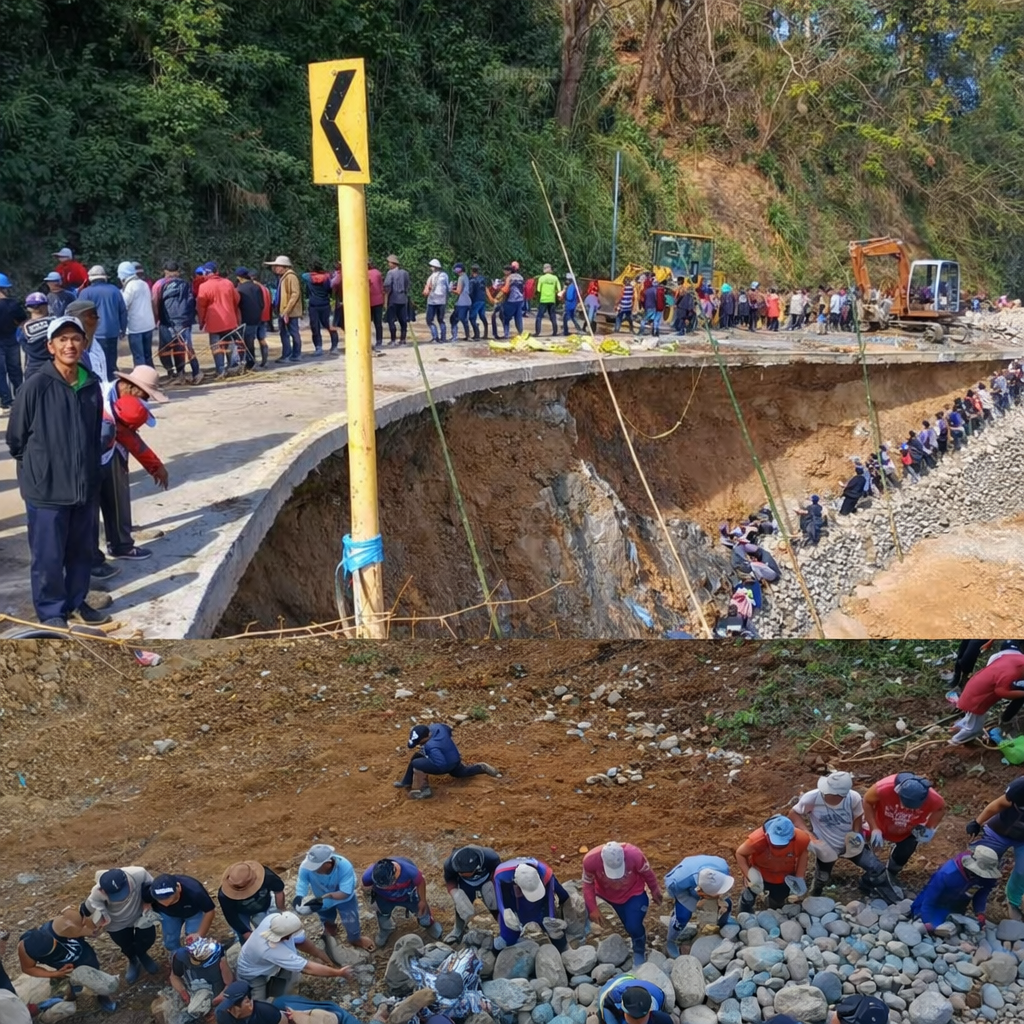
This road did not collapse suddenly.
It failed because:
- Drainage was not designed
- Slope behavior was ignored
- Upstream water was unmanaged
- The road was isolated from its watershed context
The GeoComms Perspective
At GeoComms, we treat infrastructure as part of a living system.
Through:
- openHUR — defining watershed structure
- TrueWatershed — interpreting system behavior
- openDRR — aligning decisions with risk reduction we help decision-makers understand why failures repeat and how they can be prevented.
Why This Matters (UN & SDG Context)
Why This Matters (UN & SDG Context)
Preventing repeated infrastructure failure directly supports:
- SDG 9 — Resilient infrastructure
- SDG 11 — Safer communities
- SDG 13 — Climate adaptation
- SDG 15 — Land and slope stability
Prevention is more sustainable than reconstruction.
Our Stewardship Commitment
GeoComms does not assign blame. We provide clarity.
By making terrain and water behavior visible, we help communities, engineers, and governments make better decisions before failure occurs.
Strong infrastructure begins with understanding the ground it stands on.